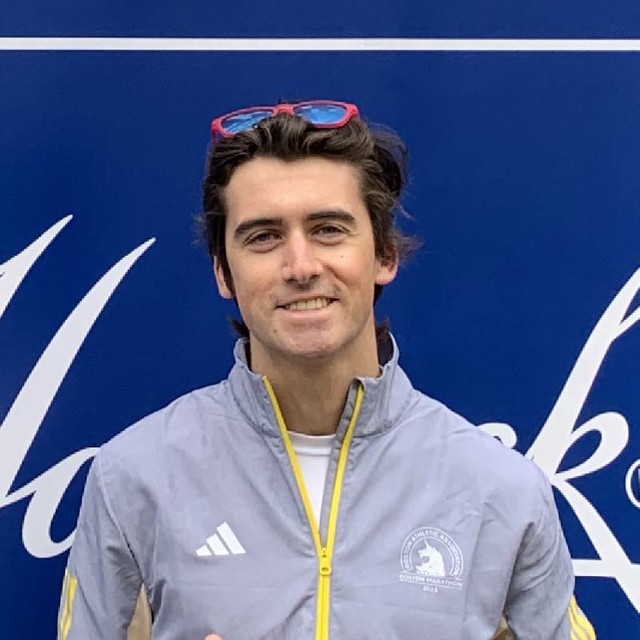
Ph.D. Candidate in Chemistry · Princeton University
Research
Theory, scalable computation, and statistical inference.
Inverse statistical mechanics
Designing interactions that stabilize prescribed structures, with emphasis on hyperuniform and stealthy disordered ground states and their relaxation to equilibrium.
Scientific computing at scale
Custom Monte Carlo and molecular dynamics engines, parallelized with OpenMP, SIMD, and CUDA, that run on multi-GPU clusters and process hundreds of gigabytes of trajectory data.
Statistical inference and machine learning
Bootstrap uncertainty quantification, estimator-bias diagnosis, mutual-information estimation, and deep-learning models that infer interaction potentials from structure.
Experience
Graduate Research Assistant
Princeton University · Complex Materials Theory Group
Advisor: Prof. Salvatore Torquato. Princeton, NJ.
- Advance theory and computational methods in inverse statistical mechanics for the targeted design of materials with prescribed structure, with emphasis on disordered stealthy hyperuniform ground states.
- Quantified how diverse initial many-particle configurations evolve to hyperuniform ground states, and how nonequilibrium initial conditions relax to equilibrium, using large-scale Monte Carlo and molecular dynamics simulations on multi-GPU clusters. First-author paper in Phys. Rev. E; second first-author manuscript in preparation.
- Designed and implemented scalable CPU- and GPU-parallel algorithms for many-body simulation in HPC environments (C/C++ with OpenMP and SIMD, CUDA, JAX).
- Built a bootstrap uncertainty-quantification pipeline for relaxation times estimated from noisy simulation time series, cutting data volume and runtime by orders of magnitude while reproducing the original estimates exactly.
- Diagnosed estimator bias and sampling artifacts that would otherwise have distorted published results, and designed corrected analysis protocols.
- Implemented GPU-accelerated mutual-information estimators in JAX to analyze hundreds of gigabytes of stochastic trajectory data.
- Developed deep-learning models (neural operators, diffusion models, equivariant graph networks) in PyTorch to infer interaction potentials from structural data, benchmarking architectures across hundreds of tracked GPU runs.
Research Intern
PARADIM (NSF Materials Innovation Platform) · Johns Hopkins University
Advisors: Dr. David Elbert, Prof. Tyrel McQueen, Dr. Apurva Mehta. Baltimore, MD.
- Advanced strategies for real-time data analysis and autonomous experimental control with machine learning, toward accelerated discovery of inorganic materials.
- Developed a statistical-learning algorithm and its implementation for automatic signal-structure and spectral-peak detection in X-ray diffraction data.
- Implemented live streaming of experimental data and online analysis with Apache Kafka; presented the work at Cornell University.
Undergraduate Research Assistant
Johns Hopkins University · Department of Chemistry
Advisors: Prof. Lan Cheng (2022–2023) and Prof. J. D. Tovar (2020–2023). Baltimore, MD.
- Studied relativistic effects in light- and heavy-atom molecules with coupled-cluster theory; computed vibrational lifetimes and polarizabilities of laser-cooled molecular and heavy-element ionic diatoms.
- Modeled blackbody-driven vibrational lifetimes of optically trapped polyatomic molecules in collaboration with the Doyle group (Harvard); co-authored the resulting Phys. Rev. A paper and presented the work at the ACS Spring National Meeting.
- Benchmarked perturbative versus variational treatments of spin–orbit coupling in heavy-element molecules.
- Computed optimized geometries and orbital energies of cycloparaphenylenes with density-functional theory on HPC clusters; wrote a Python package for nucleus-independent chemical shifts and automated Gaussian16 workflows on the Maryland Advanced Research Computing Center.
- Synthesized novel organic compounds and characterized them by NMR and mass spectrometry.
Research Intern
Massachusetts General Hospital · Pulmonary and Critical Care Medicine
Advisors: Dr. Tristan Kooistra, Dr. Benjamin Medoff. Boston, MA.
- Studied the response of airway epithelial cells to lung inflammation and scarring toward an improved understanding of idiopathic pulmonary fibrosis.
- Created, maintained, and monitored tissue co-cultures grown from basal and immune cells of murine samples.
- Developed a Python algorithm based on Delaunay triangulation to parse the spatial distribution of cultured cells and visualize inflammation patterning.
Education
Ph.D. in Chemistry
Princeton University
Advisor: Prof. Salvatore Torquato. Ph.D. candidate; General Examination passed May 2025. Graduate Certificate in Computational Science & Engineering.
Coursework: Statistical Mechanics, Random Heterogeneous Materials, Numerical Algorithms for Scientific Computing, Phase Transformations in Materials, Condensed Matter Physics, Mathematical Methods of Engineering Analysis.
B.A. Chemistry and Applied Mathematics & Statistics; Minor in Mathematics
Johns Hopkins University
GPA 3.87/4.00. Departmental Honors in Chemistry; General Honors; Dean’s List every semester. American Chemical Society Undergraduate Award, Maryland Section (2023).
Coursework: Probability, Statistics, Bayesian Statistics, Optimization, Linear Algebra, Differential Equations, Discrete Mathematics, Topology, Statistical Mechanics, Computational Molecular Medicine, Quantum Chemistry.
Published Work
Quantification of the relaxation of nonequilibrium initial conditions of many-particle systems to their equilibrium states
S. J. Dawley and S. Torquato
In preparation
S. J. Dawley and S. Torquato
Phys. Rev. E 112, 045310
N. B. Vilas, C. Hallas, L. Anderegg, P. Robichaud, C. Zhang, S. Dawley, L. Cheng, and J. M. Doyle
Phys. Rev. A 107, 062802
Presentations
Evolution of various initial many-particle configurations to disordered stealthy hyperuniform ground states
S. J. Dawley and S. Torquato
Princeton Materials Institute Symposium, Princeton, NJ
Blackbody thermalization and vibrational lifetimes of trapped polyatomic molecules
S. J. Dawley, C. Zhang, X. Zheng, and L. Cheng
Talk, ACS Spring National Meeting, Indianapolis, IN
Streaming by design for materials characterization
S. J. Dawley, D. Elbert, T. McQueen, and A. Mehta
Talk, Cornell University, Ithaca, NY
Projects & Software
Many-body simulation engine
Monte Carlo and molecular dynamics for stealthy hyperuniform and related disordered systems. C/C++ with OpenMP and SIMD vectorization, CUDA kernels for the GPU path, and a JAX implementation for differentiable experiments. Runs on multi-GPU SLURM clusters and produced the data behind the Phys. Rev. E paper.
Bootstrap uncertainty quantification
A resampling pipeline that estimates relaxation times, with confidence intervals, from noisy simulation time series. Cut the data that had to be stored and the runtime by orders of magnitude while reproducing the original estimates exactly, and exposed estimator bias and sampling artifacts in earlier analyses.
GPU mutual-information estimators
JAX implementations of mutual-information estimators for detecting directional dependence in stochastic trajectories. Scales to hundreds of gigabytes of trajectory data on a single node.
Learning potentials from structure
PyTorch benchmark of neural operators, diffusion models, and equivariant graph networks for the inverse problem of inferring pair potentials from structural data. Hundreds of tracked GPU runs (Weights & Biases) across architectures and data regimes.
nics-aroma
Open-source Python package implementing the nucleus-independent chemical shift (NICS) method for quantifying aromaticity and electron delocalization from Gaussian16 output. Built during undergraduate work with the Tovar group at Johns Hopkins.